Introduction
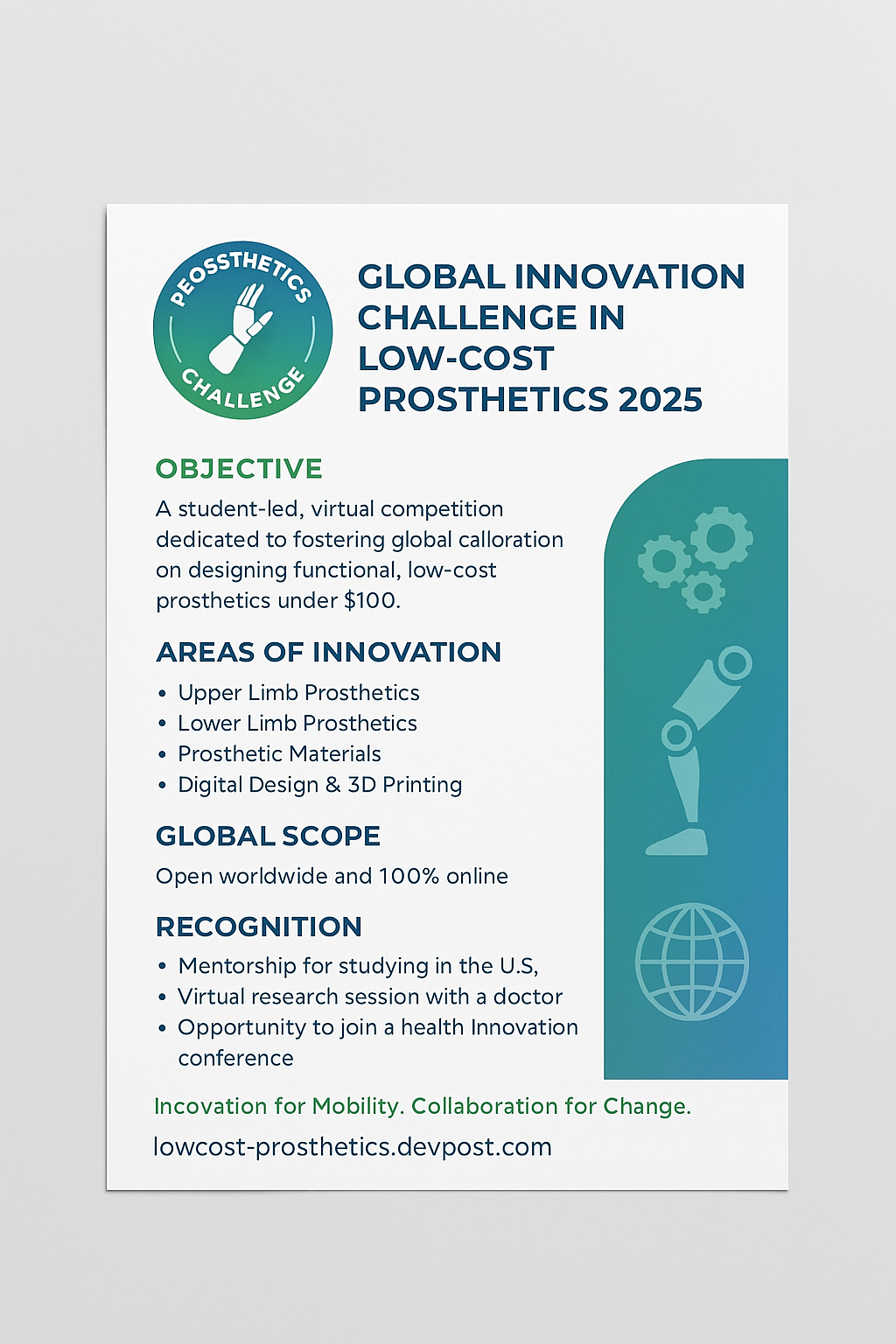
Participants will have access to supporting materials and virtual sessions focused on biomedical design, 3D printing, materials science, and global health innovation. The goal is to provide practical knowledge and inspiration so that teams can transform their ideas into real solutions.
Tools & Technologies (recommended)
- CAD Software: Tinkercad, Fusion 360, SolidWorks (student version).
- 3D Printing: Cura, PrusaSlicer, or any other open-source slicer.
- Documentation & Collaboration: GitHub, Google Docs, Canva, Notion.
- Presentation Tools: Canva, Google Slides, PowerPoint.
Inspiration
- Case studies of low-cost prosthetics developed by NGOs and independent makers.
- Stories of underserved communities in need of accessible medical devices.
- Talks and mentorship sessions with doctors, researchers, and engineers.
Contact & Support Channels
For any questions or technical support, participants can contact the organizers directly:
📧 Email: lorecalderonast28@gmail.com
💬 Slack/Discord (link will be shared after registration).
🌍 Q&A live sessions will be scheduled during the hackathon.
Links to Additional Resources
- Open Source Prosthetics Project: https://www.openprosthetics.org
- NIH 3D Print Exchange: https://3dprint.nih.gov
- WHO Assistive Technology Resources: https://www.who.int/health-topics/assistive-technology
- IDEO Design Kit: https://www.designkit.org